


Power BI RLS in Client Portals: Real-World Examples
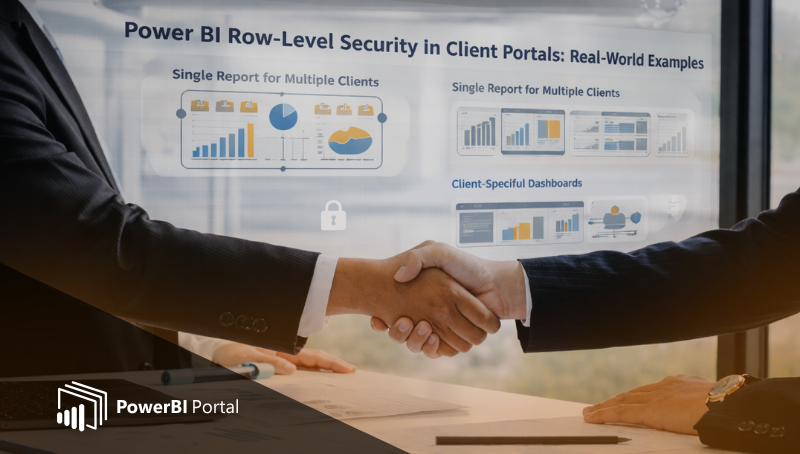
Row-Level Security (RLS) is one of the most important features in Power BI when delivering analytics to external clients. In client portals and embedded scenarios, RLS ensures that each user only sees the data they are authorized to access, even when multiple clients share the same report or dataset.
For consultancies and businesses serving multiple customers, using Power BI Row-Level Security effectively ensures that Data Protection Is Not Optional. It's Foundational.
In this article, we explore real-world examples of how RLS is implemented in client portals and embedded environments to deliver secure, scalable analytics.
Why Row-Level Security Is Critical in Client Portals
When multiple external clients access the same Power BI environment, data isolation becomes a priority. Without proper filtering, sensitive information could be exposed across tenants. Power BI RLS allows organizations to filter data at the row level based on the identity of the person viewing the report.
Key benefits of implementing RLS in customer-facing environments include:
- Restrict data visibility by user identity or organizational role.
- Deliver personalized dashboards from a single centralized dataset.
- Maintain compliance and strict data privacy standards.
- Scale analytics without the need to duplicate reports for every new client.
When implemented correctly, RLS creates a seamless experience: each client logs in and automatically sees only their own data, with no manual filtering required. This is particularly effective when you Automate Power BI Report Distribution to ensure the right data reaches the right person at the right time.
Example 1: One Report, Multiple Clients (Dynamic RLS)
A common real-world scenario involves serving multiple clients using a single Power BI report. Instead of creating 50 different .pbix files for 50 different clients, organizations apply dynamic Row-Level Security.
How it works:
- A single dataset stores consolidated data for all clients.
- RLS rules filter rows based on the USERPRINCIPALNAME() or a specific Client ID.
- The portal passes the user's identity to Power BI during the session initialization.
| Feature | Static RLS | Dynamic RLS |
| Maintenance | High (Manual role assignment) | Low (Automated based on login) |
| Scalability | Limited | High (Supports thousands of users) |
| User Identity | Manual Mapping | AD/Portal Integration |
This approach is widely used in high-traffic portals where Power BI Capacities must be managed efficiently to control costs while maintaining performance.
Example 2: Client Portals with Shared Environments
Many consultancies use a shared Power BI environment where multiple external clients access dashboards inside a centralized portal. This model often relies on Service Principals for secure data handling. For developers, keeping up with the latest PowerBI Robots updates regarding Service Principal Authentication is vital for maintaining these secure connections.
In this model:
- External users are restricted through RLS logic defined in the model.
- Internal managers might have broader access to see all client performance.
- Access is managed via Entra ID (formerly Azure AD) and specific role definitions.
By using PowerBI Robots, organizations can further streamline this by automating the distribution of these filtered reports to different stakeholders via email or SharePoint.
Example 3: Embedded Analytics with Row-Level Security
In embedded analytics scenarios, Power BI reports are integrated directly into a custom-built software application or client portal. This is often where technical questions arise regarding Power BI Embedded vs Fabric Capacities.
When using Power BI Embedded, RLS guarantees that even though multiple clients share the same compute capacity, they are logically separated. This allows organizations to:
- Deliver premium analytics without requiring every end-user to have a Power BI Pro license.
- Centralize capacity management to avoid performance bottlenecks.
- Ensure that scaling Power BI Embedded does not lead to performance issues or data leaks.
Solutions like PowerBI Portal simplify secure client access by combining embedded analytics with structured identity and role management, reducing the time spent on manual configuration from 3 days to 3 hours when combined with the right automation tools.
Best Practices for Implementing RLS in Client Portals
To ensure a secure and scalable RLS implementation, consider the following technical standards:
- Use Dynamic RLS: Avoid hard-coding user roles; use lookup tables and DAX functions to filter data dynamically.
- Centralize Definitions: Manage security logic within the data model to ensure consistency across all reports.
- Rigorous Testing: Use the "View as Role" feature in Power BI Desktop to simulate client access before deployment.
- Audit Logs: Regularly monitor access logs to ensure RLS rules are correctly preventing unauthorized data viewing.
Conclusion: RLS Enables Secure, Scalable Client Analytics
Power BI Row-Level Security is essential for delivering secure analytics in client portals, shared environments, and embedded scenarios. By leveraging RLS strategically, organizations can serve multiple clients from a single report, maintain strict data privacy, and reduce maintenance overhead significantly.
👉 Book a demo to Streamline Your Power BI Delivery .

Share this post: