


Embedding AI Predictive Models into PowerBI Portals
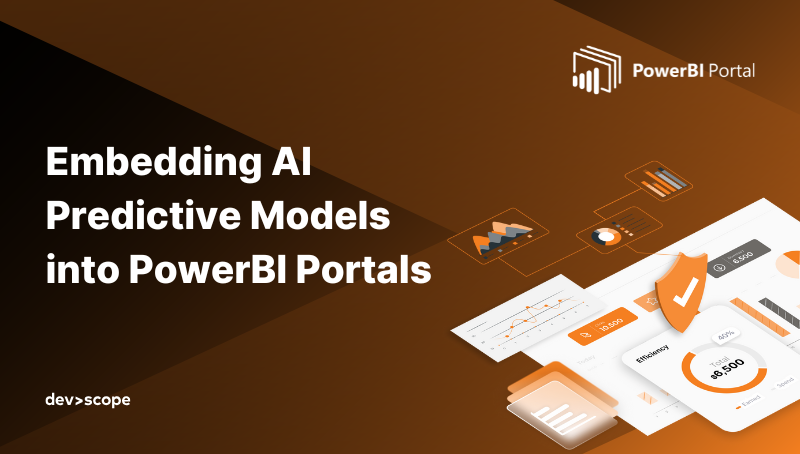
Organizations today are looking for more than static dashboards. They want actionable insights, forecasts, and recommendations — delivered directly to clients, partners, or internal stakeholders. Embedding predictive models into PowerBI Portals allows consultancies and enterprises to do just that, transforming traditional reporting into Analytics-as-a-Service.
Why Embed Predictive Models?
Predictive models extend Power BI dashboards beyond historical analysis:
- Forecasting: Anticipate sales, demand, churn, or inventory needs.
- Anomaly Detection: Identify irregular patterns in real time.
- Risk Scoring: Evaluate credit risk, compliance alerts, or operational exposure.
- Recommendation Systems: Suggest next steps or actions based on historical behavior.
Embedding these models inside a PowerBI Portal ensures that stakeholders interact with the predictions without needing technical knowledge or separate tools.
How It Works
- Develop the Predictive Model
- Use Azure ML, Fabric Notebooks, or Python/R scripts to train predictive models.
- Validate the model with historical data to ensure accuracy.
- Integrate the Model with Power BI
- Expose model outputs as datasets in Power BI.
- Use DirectQuery or push datasets for real-time predictions.
- Ensure data refresh schedules align with the model's update frequency.
- Embed in PowerBI Portal
- Host dashboards with Power BI Embedded (A-SKUs) or Fabric capacities (F-SKUs).
- Configure row-level security (RLS) to control who sees which predictions.
- Provide interactive visualizations with slicers, filters, and scenario analysis.
- Enable Predictive Interaction
- Users can input parameters (e.g., region, product, timeframe) to see model-driven forecasts.
- AI-driven narratives can automatically explain results, highlighting trends or anomalies.
Real-World Examples
- Retail: A consultancy embeds demand forecasting models into portals for multiple store chains. Managers log in to view inventory predictions and optimize stock levels in real time.
- Finance: A bank provides a portal where relationship managers can see credit risk scores for clients based on predictive models, enabling proactive decision-making.
- Healthcare: Hospital administrators access predictive dashboards for patient flow, bed occupancy, and resource planning, all securely within a branded portal.
Benefits of Predictive Portals
- Accessible Insights: Users get actionable predictions without learning AI or running scripts.
- Recurring Revenue Opportunities: Consultancies can offer predictive analytics as a service to multiple clients.
- Scalable Architecture: Using Fabric or Power BI Embedded capacities, portals can serve dozens, hundreds, or thousands of users.
- Enhanced User Experience: Branded, interactive portals with embedded AI make dashboards engaging and easier to act upon.
- Reduced Licensing Complexity: Clients do not need individual Power BI licenses — all predictions are served securely via the portal.
Getting Started
- Identify which business processes benefit from predictive insights.
- Build or adapt models in Azure ML, Fabric, or Python/R.
- Integrate predictions with Power BI datasets and dashboards.
- Deploy dashboards in PowerBI Portal for secure, branded access.
- Monitor usage, model performance, and adjust as business needs evolve.
Conclusion
Embedding predictive models into PowerBI Portals transforms static reporting into proactive, intelligent analytics. It allows consultancies and enterprises to deliver value at scale, reduce dependency on manual analysis, and offer clients a true Analytics-as-a-Service experience.
Whether it's forecasting, risk scoring, or anomaly detection, predictive dashboards make data actionable, interactive, and accessible for every user.
👉 Ready to turn your dashboards into predictive portals? Contact us to see how PowerBI Portal can embed predictive models and scale intelligent insights to your clients.

Share this post: